DOC · SOYBEAN OIL LINESPEC · ENGINEERING DATASHEET
Soybean · oil 18-22% · phospholipids 1.8-2.5% · lecithin recovery

Soybean hydraulic line: oil 18-22%, phospholipids 1.8-2.5%, hot 80-85°C or cold ≤60°C, with lecithin recovery.

Bean oil only 18-22% — 90%+ of global capacity is hexane extraction. Hydraulic fits non-GMO/organic cold press, lecithin-led P&L, pilot lines, and regional meal+oil mills where identity and meal protein 44-50% beat residual-oil ≤1% economics.

Start from hard data, not tonnage: oil 18-22%, phospholipids 1.8-2.5% (must degum), meal protein 44-46% or 48-50% dehulled. Hot: crack 4-6 pieces → cook 80-85°C / moisture 10-12% → 200-325 ton, residual oil 6-8%. Cold: ≤60°C on 355-500 ton, residual oil 12-15% for premium identity oil. Hydration degumming recovers concentrated lecithin (≥60% phospholipids). Only after pretreatment depth, lecithin path, and meal offtake are clear does press selection become useful.

KEY PARAMETERS03
01

Hard data first: bean oil 18-22%, crude-oil phospholipids 1.8-2.5% (highest among common oilseeds), meal protein 44-46% with hull or 48-50% dehulled. Hydraulic residual oil is 6-8% hot / 12-15% cold — not solvent ≤1%.

02

Hot route: crack to 4-6 pieces → cook 80-85°C / moisture 10-12% → 200-325 ton, 100-160 kg/barrel, 30-40 min. Cold route: ≤60°C on 355-500 ton. Degumming recovers food/pharma lecithin that often outprices the oil.

03

Quote packet must lock bean identity (GMO/non-GMO/organic), dehulling for meal protein, conditioning window, lecithin recovery yes/no, and steam/vacuum utilities — before any press tonnage is compared.

01
3000+
Successful installations worldwide
02
100,000+
Tons of oilseeds processed per day (reference capacity)
03
95%
Oil yield with advanced hydraulic technology (target)
04
125+
Long-term clients & agents globally
SEC-01
Project path

A soybean project should start with feed condition and pretreatment depth, not machine tonnage

Soybean has lower oil content than peanut or sesame, so the economic logic of a hydraulic soybean line depends heavily on pretreatment discipline, meal value, and how crude oil will be handled downstream. Those realities should come before model selection.

STEP-01

Define the bean: whole, dehulled, or already flaked

If dehulling and flaking are not yet solved, the press quote cannot be accurate. Hull content affects oil color, phospholipid load, and meal grade simultaneously.

STEP-02

Lock the conditioning window before sizing the press

Soybean conditioning—moisture, temperature, and residence time in the cooker—is where batch consistency is either built or lost. The press only amplifies whatever the conditioner delivers.

STEP-03

Decide crude-oil treatment before the first shipment

Soybean crude oil is high in phospholipids. Whether you hydrate, settle, or hand off to an existing refinery changes tank sizing, piping, and the overall plant budget.

STEP-04

Value the meal as seriously as the oil

Soybean meal is often the more valuable output. If the meal feeds a livestock operation, enters local feed markets, or needs specific protein certifications, the press route and residual-oil target must accommodate that.

18–20%
typical soybean oil content
Lower oil content makes pretreatment and meal value more decisive than on higher-oil seeds.
2
routes most projects compare
Practical hot pressing for edible oil, or controlled lower-temperature pressing for specialty and organic markets.
1
meal value decision to make early
Residual oil in meal and protein grade are often negotiated before press tonnage is discussed.
SEC-02
Line engineering

The modules around the soybean press matter more than the press itself

A soybean hydraulic line is not a single machine. It is an intake station, a dehulling floor, a conditioning stage, a press cell with operator rhythm, a crude-oil buffer zone, and a meal discharge system. The scope becomes clear when those modules are read as one flow instead of separate blocks.

01

Intake and bin segregation

Moisture variation between bean lots is common. Segregating intake by moisture and hull condition prevents the conditioner from fighting inconsistent feed all shift.

02

Dehulling and flaking floor

Soybean hull removal rate directly affects crude-oil color and phospholipid load. A 90% versus 70% dehulling target creates two different downstream conversations.

03

Press cell and operator staging

Barrel loading, cycle time, and discharge need a clear operator workflow. Soybean batches are typically larger volume per cycle, so labor staging matters more than on higher-oil seeds.

  • Confirm whether dehulling and flaking already exist at the plant before sizing the hydraulic scope.
  • Cooker residence time and barrel loading rhythm should be checked against shift output, not a standalone machine number.
  • Without enough crude-oil settling or filtration buffer, the press cell will spend too much time waiting downstream.
  • For retrofit projects, bay width, door clearance, and utilities matter as much as press tonnage.
SEC-03
Market routes

Three soybean project types that need different line conversations

A soybean line serving a feed-linked regional mill, a non-GMO specialty oil brand, and an industrial crude-oil supplier should not be scoped the same way. The press may overlap, but pretreatment depth, crude-oil treatment, and meal specifications are different decisions.

01

Feed-linked regional mill

Meal protein and residual oil are negotiated with feed buyers before the line is sized. The crude oil is often sold as-is or lightly settled before transfer to a refinery.

02

Non-GMO or organic specialty oil

Traceability, lower-temperature handling, and cleaner crude-oil transfer become the selling points. The meal also carries a premium if certification is maintained through the process.

03

Phased plant upgrade or new greenfield

Many soybean projects start with pressing and settling, then add refining, dewaxing, or filling modules in a later phase. The first layout must leave room for these connections.

  • Feed-linked mills should name the meal outlet and protein target before the line discussion starts.
  • Specialty oil projects should state the traceability and certification scope so the line matches.
  • Greenfield projects should include civil timeline, utility readiness, and phased scope in the first inquiry.
  • All soybean projects should explain how crude oil leaves the plant: settled, degummed, tank-stored, or piped to a refinery.
SEC-04
RFQ discipline

A soybean inquiry that prevents re-scoping needs these inputs from day one

Soybean projects are re-scoped more often than most other seeds because pretreatment depth, crude-oil treatment, and meal specification are frequently left out of the first inquiry. A complete first pack moves the discussion closer to a real plant.

  • State whether beans arrive whole, dehulled, cracked, or already flaked — and whether dehulling is part of this purchase.
  • Give daily throughput by shift and hour, not just annual tonnage, because hydraulic soybean pressing is batch-based.
  • Name the crude-oil destination: settling tanks, hydration degumming, direct refinery transfer, or packaged oil.
  • Describe the meal requirement: protein target, residual oil ceiling, and whether the meal enters a certified feed program.
  • Attach workshop photos, floor plans, and a clear note on steam, electrical, and cooling-water availability.
  • If this phase stops at pressing, include one note about the planned refining, filling, or storage expansion.

The strongest soybean inquiries treat the meal as a co-product with its own spec sheet, not as press waste. That single shift changes the whole engineering conversation.

SEC-05
Batch rhythm

Use the soybean hot-press rhythm as an equipment-scope check, not as a loose model note

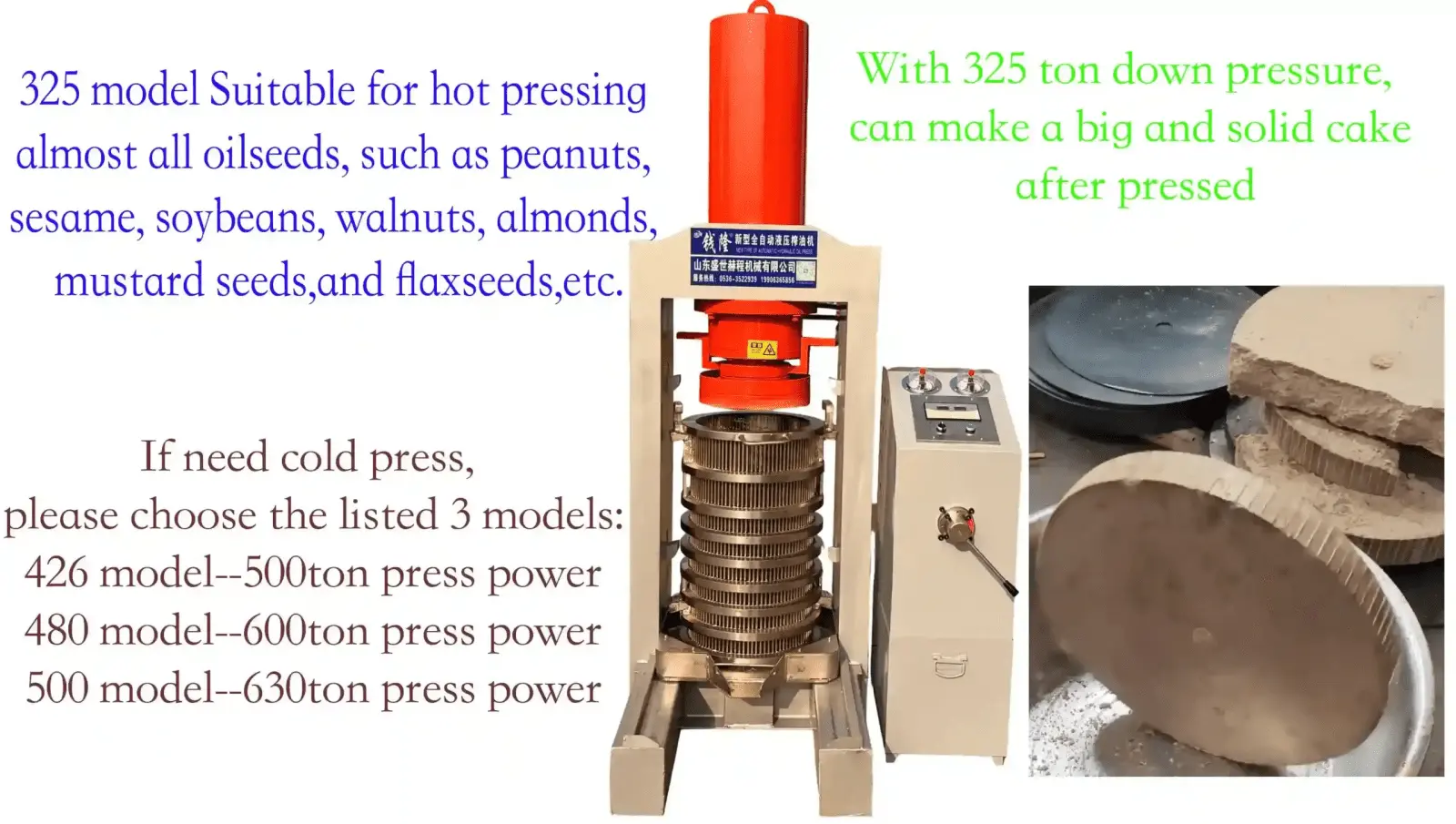
A soybean line should be described with a complete rhythm: pre-press capacity, cooker count, steamer, and multiple 325 hydraulic presses. These numbers explain how a real line balances preparation, cooking, barrel loading, pressing, crude-oil handling, and meal discharge.

FIG-01IMG
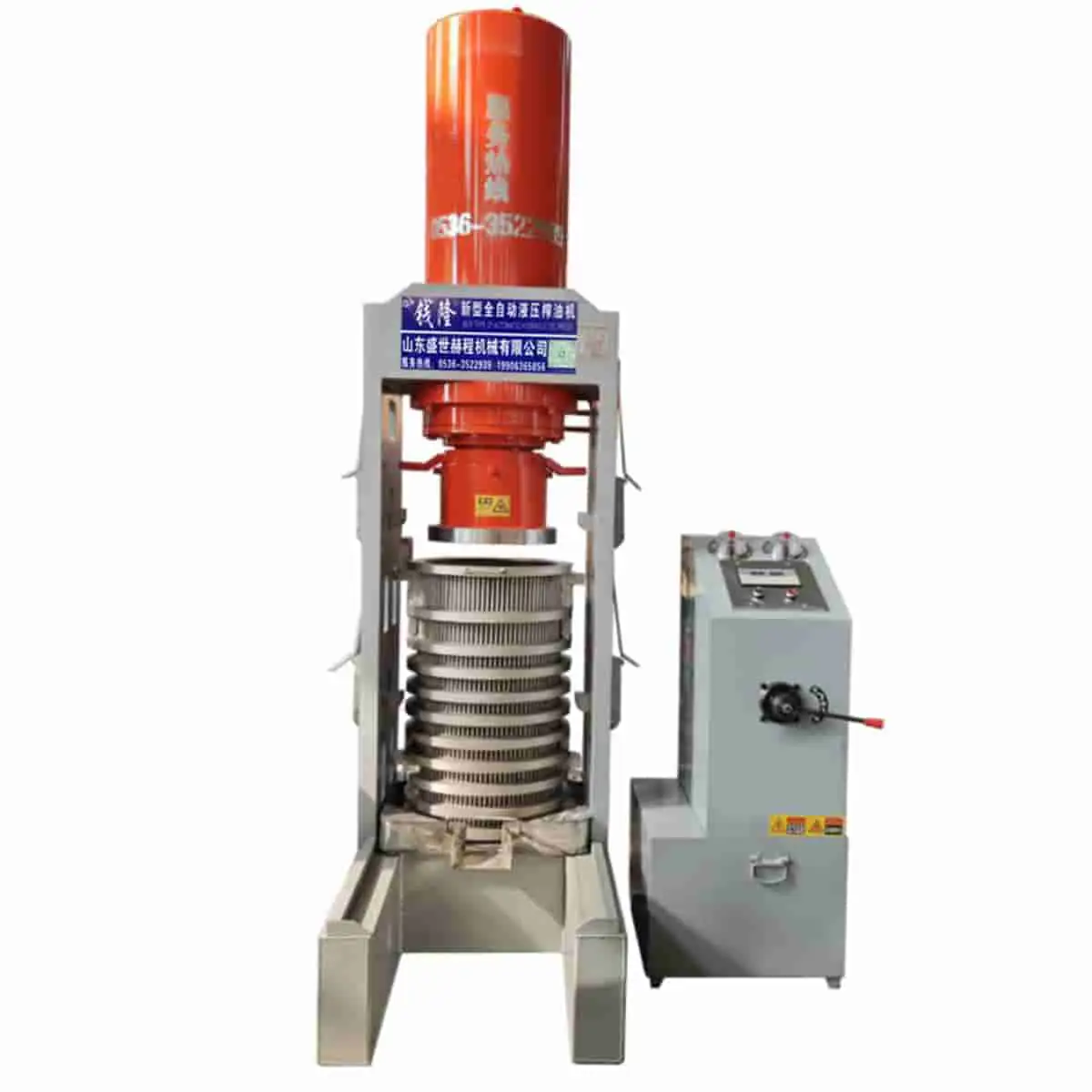
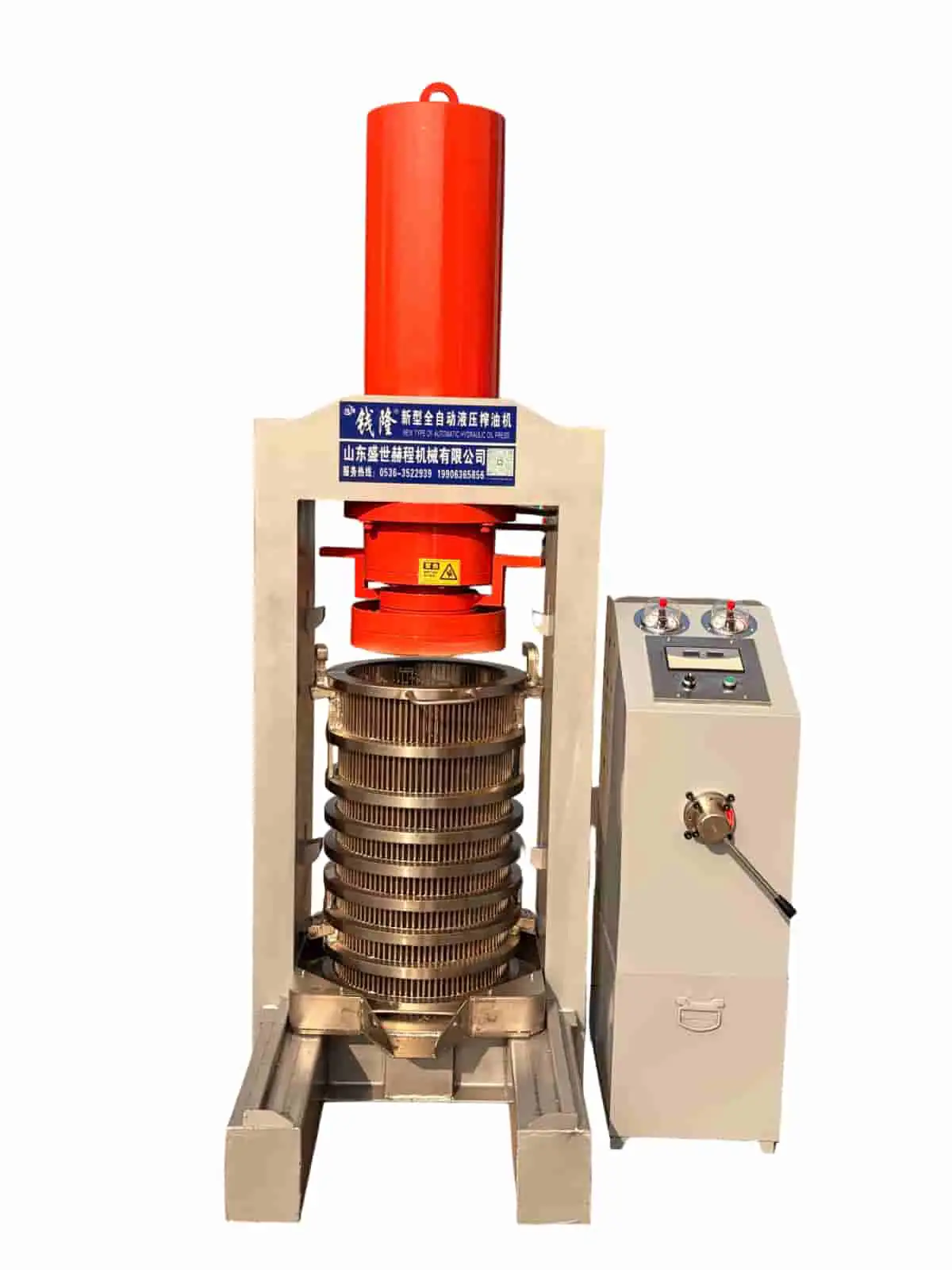
325 hydraulic press cell reference for soybean325 press cell

Soybean line sizing should connect cooker rhythm with 325 barrel rhythm

This is where the soybean route becomes concrete: the equipment discussion starts only after the cooking buffer and meal handoff are visible.

01

500 kg/h pre-press reference

A 500 kg/h upstream preparation rate only makes sense when cooking and pressing cells can keep up. It should be compared with shift hours, bean moisture, and meal target.

02

Five flat-bottom woks plus steamer

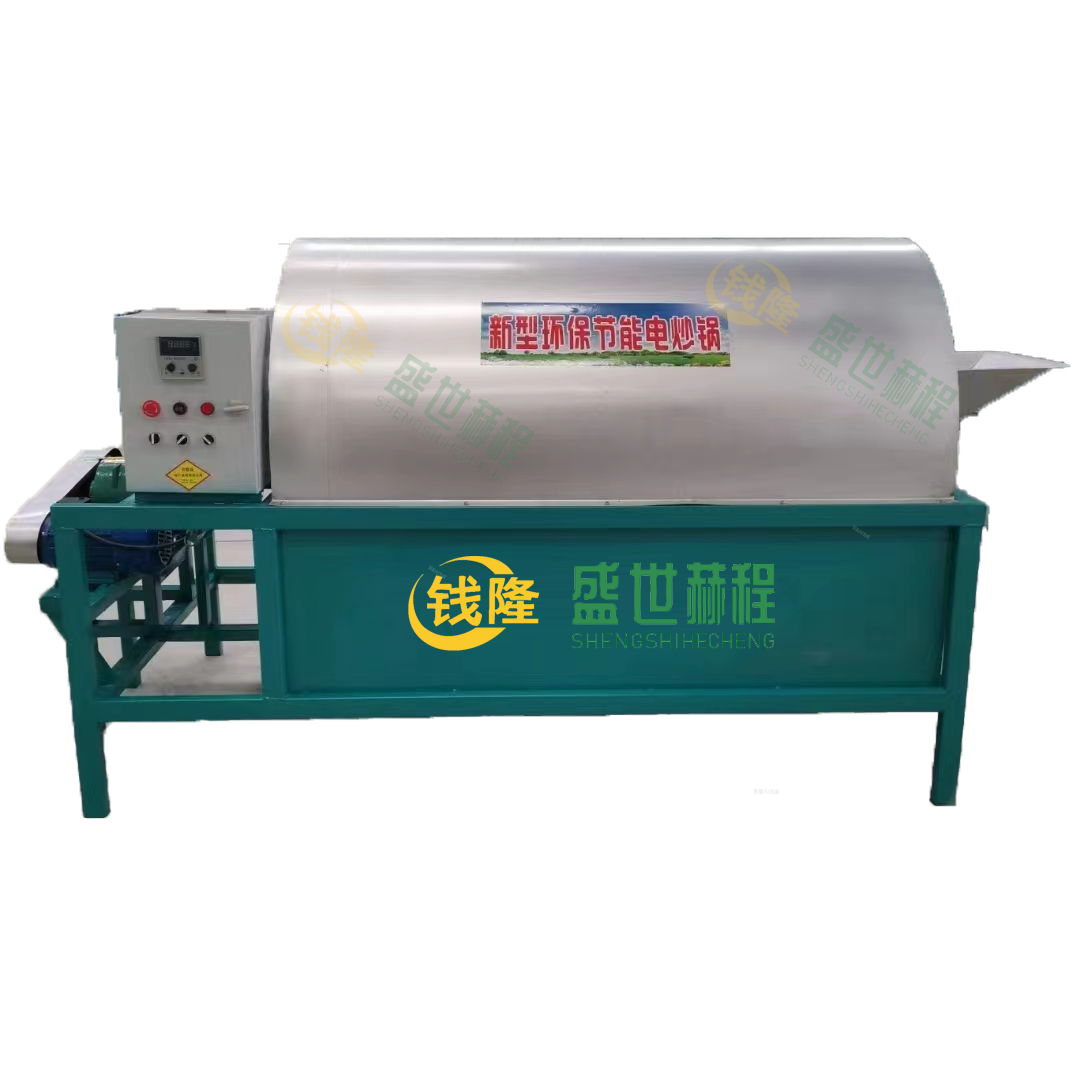
A setup with multiple electric-heated flat-bottom woks and a steamer means the soybean scope should discuss cooking buffer and feed uniformity before press tonnage.

03

Five 325 presses as one press cell

A 325 barrel of about 100 kg and a roughly 1.5-hour two-barrel rhythm are planning references. The final number still depends on bean condition, cake target, and operator handoff.

Pressing scope & modules

Hot soybean: 200-325 ton hydraulic after cook 80-85°C / moisture 10-12%, 100-160 kg/barrel, 30-40 min, residual oil 6-8%. Cold soybean: 355-500 ton at ≤60°C, ~2 h/barrel, residual oil 12-15%. Size the cooker, degumming reactor, lecithin dryer, and meal path first — press tonnage is never the whole quote.

M-01

Honest hydraulic positioning vs solvent extraction

Globally 90%+ soybean oil is hexane-extracted (residual oil ≤1%). Hydraulic is not a mini solvent plant. Use it for non-GMO/organic cold press, lecithin-led P&L, pilot lines, and regional meal+oil — state the lane before quoting models.

M-02

Mandatory degumming + lecithin recovery

Crude soy oil phospholipids 1.8-2.5% (highest among common oilseeds). Without hydration degumming the oil throws gum sediment, smokes on fry, and fails retail. Wet gums dry to concentrated lecithin — often the profit center.

M-03

200/300/325 hot + cooker matched to cycle

Hot route needs steam cooker capacity ≥2× press cadence so the press never waits. 200 ton (160 kg/barrel) or 300/325 (100 kg/barrel, 30-40 min), residual oil 6-8%. Cold uses 355-500 ton at ≤60°C.

M-04

Meal protein lanes: 44-46% feed vs 48-50% dehulled food

With-hull meal serves pig/poultry feed. Pneumatic dehulling (≥85% hull removal) raises protein to 48-50% for soymilk, plant protein, and pet-food ingredients. Choose the meal market before layout freezes.

Real equipment & workshop

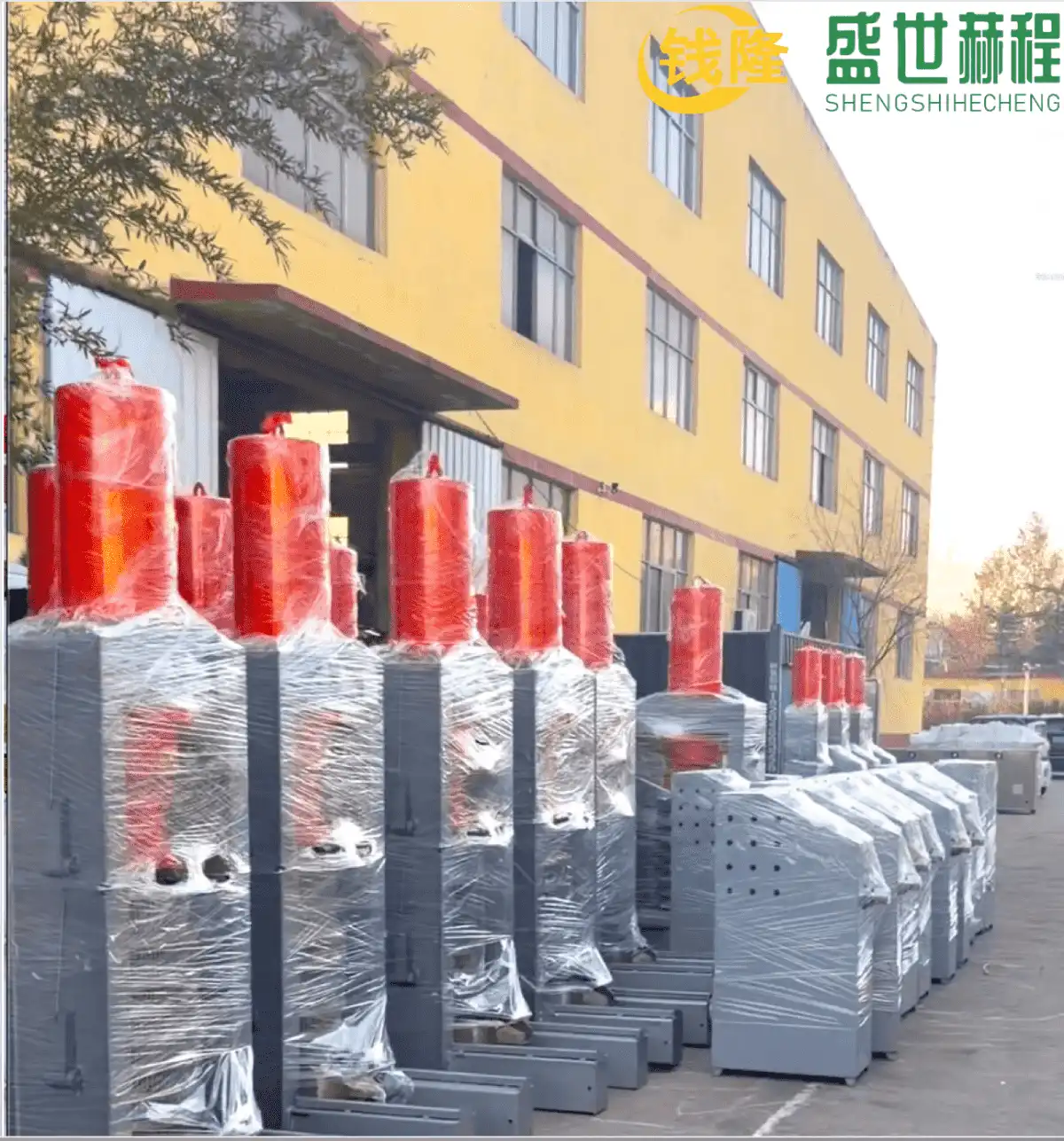
See equipment, workshop, and delivery

Contact after viewing →
FIG-0100:16
Soybean pressing

Soybean pressing rhythm from loading to oil flow

For soybean projects, check conditioning, barrel loading, pressing, crude-oil handoff, and meal discharge.

FIG-0200:14
Barrel and model

See the 300 / 325 / 355 barrel and model scale

Seeing the barrel, frame, and loading space makes capacity, shifts, and model selection easier to discuss.

FIG-0300:16
Workshop

Workshop view for layout and operating side

Useful for checking footprint, access aisles, loading side, cake discharge, and filtration position.

FIG-0400:14
Cake discharge

Cake discharge should be planned with oil handling

Bagging, bins, or crushing after discharge changes press-room flow and by-product value.

FIG-0500:14
Capacity upgrade

500 model view before expansion or multi-press planning

When the project moves beyond trial batches, workshop height, lifting, loading, and filtration need to be checked together.

FIG-0600:14
Export case

Export projects need voltage, packing, and delivery conditions

For export projects, voltage, crate packing, spare parts, installation mode, and destination port should be aligned early.

Common project questions

Align the common questions first

Bean oil is only 18-22%. Hydraulic residual oil stays 6-15%, leaving money in the cake. Hexane extraction leaves residual oil ≤1% and scales with meal economics. Hydraulic wins only where identity, cold-press claims, lecithin quality, or pilot flexibility justify higher residual oil.

REQUEST FOR QUOTE

Ready to size your soybean oil line?

Share feed condition, target output, press/solvent route, and site constraints, and we will turn scope into a workable engineering datasheet.