Soybean hydraulic vs solvent: yield, residual, scale, capex
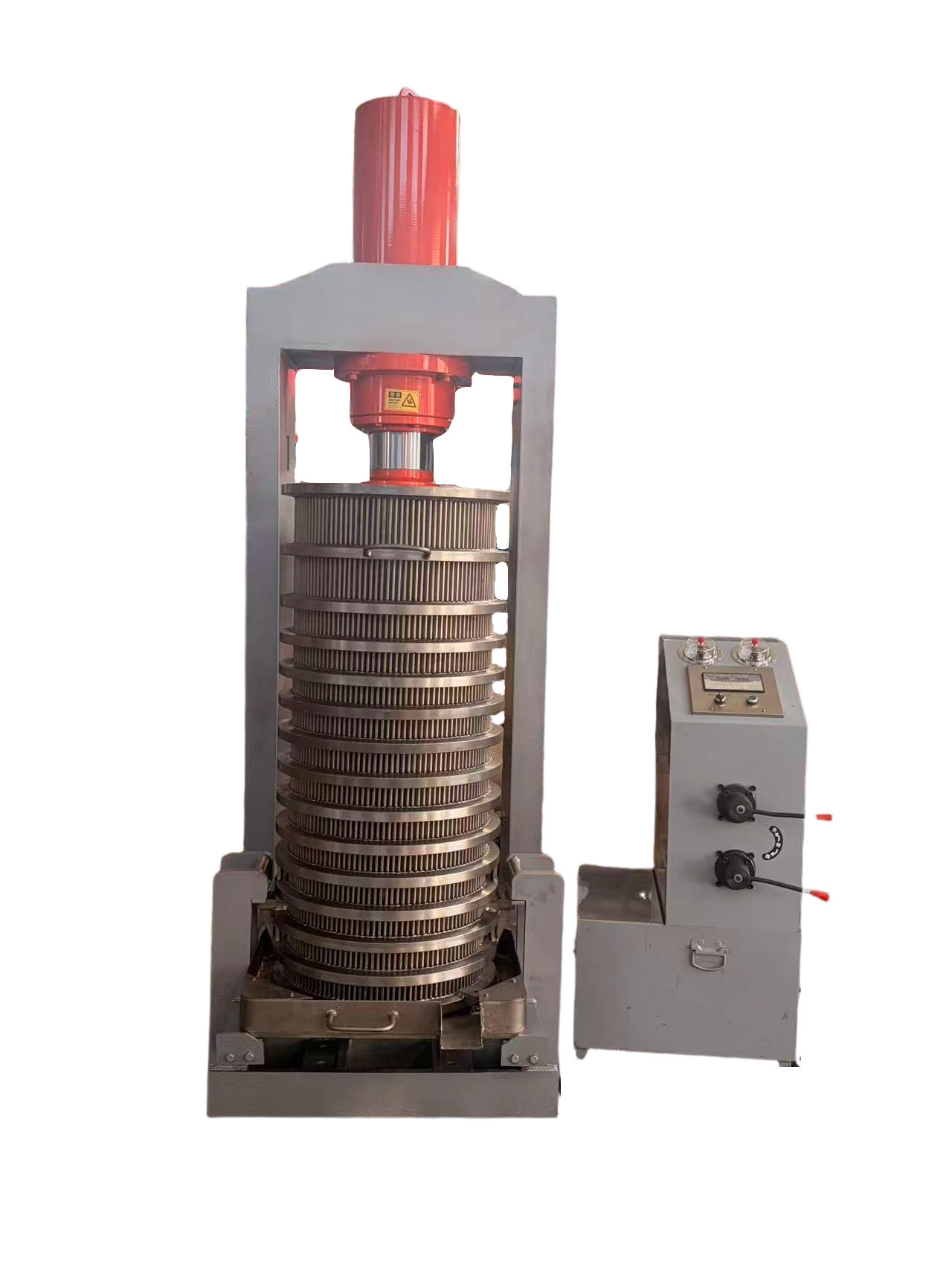
Hydraulic pressing: 200-325 ton press, 80-100 kg/barrel, 30-45 min cycle, yield 12-16% of bean weight, residual cake oil 6-8%, no solvent. Best for non-GMO, organic, specialty, pilot, regional <50 t/d. Solvent extraction (hexane): continuous, throughput 100-3000+ t/d, yield 18-22% (>95% of oil recovered), residual oil <1%, requires DT-DC + solvent recovery + flammable-area design. Capex 5-10× hydraulic. Hybrid: hydraulic pre-press + solvent extraction is standard for high-oil seeds (>30%), not used for soybean (oil only 18-22%).
Hydraulic batch route
200-325 ton press, 80-100 kg/barrel, 30-45 min/cycle, yield 12-16%, residual cake oil 6-8%, no solvent. Capex $50-150k for 5-30 t/d. Best for non-GMO/organic/specialty, label-friendly.
Solvent extraction route
Continuous extractor + DT (desolventizer-toaster) + solvent recovery, hexane working solvent. Yield 18-22% (recovery >95%), residual oil <1%. Capex $1-10M for 100-3000 t/d. Mainstream commodity soy oil.
Scale threshold
Below ~50 t/d: hydraulic dominates (small capex, batch control, no flammable area). Above ~100 t/d: solvent extraction wins on per-ton cost. Between 50-100 t/d: mechanical screw press + solvent extractor common compromise.
Hard-data comparison
Where the two routes diverge in numbers
Yield and residual oil
Hydraulic: yield 12-16% bean weight (60-80% of total bean oil 18-22%), residual cake oil 6-8%. Solvent: yield 18-22% (recovery >95%), residual oil <1%. Solvent extracts 4-6 pt more oil per bean.
Capex and operating cost
Hydraulic 5-30 t/d: $50-150k capex, no solvent, electricity + steam only. Solvent 100 t/d: $1-3M capex, hexane consumption 1-2 kg/t, fire/explosion area design (zone 1/2), continuous operation.
Product positioning
Hydraulic: 'mechanically pressed', non-GMO/organic-friendly, specialty retail, soybean meal protein 44% (with hull) or 48-50% (dehulled). Solvent: commodity refined oil + soybean meal 44% (most US/Brazil mainstream).
Decision criteria
What actually picks the route
- Daily throughput: <50 t/d → hydraulic. 50-100 t/d → mechanical screw press (continuous, yield 14-17%) or hybrid. >100 t/d → solvent extraction.
- Product positioning: non-GMO + organic + specialty retail → hydraulic. Commodity bulk oil + bulk meal → solvent.
- Compliance: no-solvent label requires hydraulic. EU organic (2018/848) excludes hexane-extracted oil from organic certification.
- Capex limit: <$200k → hydraulic only. $1M+ available → solvent feasible.
- Site: solvent extraction requires flammable-area zoning, fire/safety review, dedicated DT and solvent recovery building.
Common errors
Where soybean route claims fall apart
- Claiming 'cold-pressed soybean oil' on a 80-100°C press jacket — hydraulic soybean still uses 70-80°C conditioning + 80°C press; truly cold-pressed soybean is rare and unprofitable.
- Comparing yield 12-16% (hydraulic) vs 18-22% (solvent) without noting solvent's hexane consumption + DT energy + flammable-area capex.
- Promising commodity-scale tonnage (>50 t/d) on a hydraulic batch line without acknowledging the cycle limit (30-45 min × 80-100 kg = ~3.5 t/d per press at 24-h operation).
- Marketing solvent-extracted soybean oil as 'organic' — disqualified under EU 2018/848, USDA NOP equivalent rules.
Questions to confirm next
Why does soybean rarely use cold pressing?
Can a hydraulic plant grow into a solvent extraction plant later?
Keep the engineering path moving
These next topics sharpen process, layout, and utility scope
Ready to size a line for your oilseed?
Share feed condition, pretreatment depth, shift output, post-press destination, and utility limits. We use that to narrow the scope to the pressing section, clarification loop, and real factory boundary.