Small soybean factory: 5-30 t/d hydraulic, dehulled + flaked + conditioned
Reference layout for 5-30 t/d hydraulic soybean line: cleaning + drying (intake moisture 12-13% → 10-11%) → cracker rolls + dehuller (hull 7-9% removed) → smooth-roll flaker (0.25-0.35 mm) → conditioner (70-80°C × 30-45 min) → 200-325 ton hydraulic press × 1-3 units → 200-300 mesh plate-frame filter → settling tank → crude oil to degumming or filtered bulk. Yield 12-16% (600 kg-4.8 t oil/day on 5-30 t/d feed). Cake protein 48-50% (dehulled HiPro meal). Capex Phase 1 ~$50-150k ex-works.
Small soybean line reference: 5-30 t/d hydraulic batch route, yield 12-16% bean weight, 200-325 ton press × 1-3 units, 80-100 kg/barrel × 30-45 min/cycle, dehulling + flaking + conditioning + plate-frame filter, capex $50-150k Phase 1.
Reference scale: 5-30 t/d
5 t/d feed: 1× 200 ton press, ~1 t/h prep line. 30 t/d: 3× 325 ton press, ~5 t/h prep line. Above 30 t/d, switch to mechanical screw press (continuous) or solvent extraction.
Phased investment
Phase 1: prep line + 1× 200-325 ton press + plate-frame filter (~$50-100k for 5-10 t/d). Phase 2: +press unit + degumming + storage tank ($30-80k). Phase 3: refining train (RBD ~$100-300k).
Workshop footprint
10 t/d soybean line: 250-400 m² workshop, 4 m height (vertical conveyors), 380V/50Hz 100-150 kW, 2-4 operators per shift. + 80 m² meal storage + 50 m² oil tank room.
What a 5-30 t/d soybean line must lock in
- ▸Feed condition: whole bean (need full prep line) or already cracked/flaked (skip prep, save 30-40% capex).
- ▸Dehulling: yes (HiPro meal protein 48-50%, +15-25% revenue) or no (commodity meal 44%, simpler line).
- ▸Press class: 200 ton (5 t/d, 1 unit), 325 ton × 1-2 (10-20 t/d), 325 ton × 3 (30 t/d).
- ▸Crude oil endpoint: settling + filtered bulk oil, OR degumming + RBD refining train, OR handoff to refining contract.
- ▸Meal plan: bagged HiPro 48-50% (premium feed), commodity 44% meal, or food-grade soy flour (defat + grind).
Worked-out 10 t/d hydraulic soybean configuration
- ▸Cleaning + drying: vibrating screen + magnetic separator + destoner + hot-air dryer (intake 12-13% → 10-11% moisture). Capacity 1-1.5 t/h.
- ▸Cracking + dehulling: corrugated cracker rolls (1-2 mm gap, 4-6 pieces per bean) + aspirator (hull 7-9% removed). Capacity 1-1.5 t/h.
- ▸Flaking + conditioning: smooth roll flaker 0.25-0.35 mm + steam-jacketed conditioner 70-80°C × 30-45 min, moisture 10-11%.
- ▸Hydraulic press: 1-2× 325 ton, 80-100 kg/barrel, 30-45 min/cycle. Yield 12-16% bean weight = 1.2-1.6 t oil/day on 10 t/d feed.
- ▸Filtration: 200-300 mesh plate-frame + settling tank 24 h (1000-2000 L). Add 1-5 μm bag for retail bottling.
- ▸Meal handling: cake breaker + 25/50 kg bagger; or hammer mill + sifter for food-grade soy flour.
What to confirm before scoping Small Soybean Oil Factory | 5-30 t/d Hydraulic, Yield 12-16%, Capex $50-150k
Small Soybean Oil Factory | 5-30 t/d Hydraulic, Yield 12-16%, Capex $50-150k should not be quoted from an equipment name alone. Check feed lots, target oil, post-press handling, and packing rhythm in one scope before deciding which Soybean Oil Press modules stay. Listed on the factory hot-press page — discuss 300/325 first.
When feed condition, moisture, impurities, batch weight, and product position are unclear, press tonnage and filter area become guesswork. Factory systems share 60 MPa and 2.2 kW motors; hot pure press is 30–40 min/barrel and cold pure press is ~2 h/barrel — cycle time matters more than brochure tonnage.
- ▸Confirm whether feed is whole seed, kernels, pretreated material, or an existing semi-finished stream.
- ▸Confirm whether the target is crude oil, filtered oil, bottled oil, drum ingredient oil, or a refining handoff.
- ▸Hot cycle reference: pure press 30-40 min/barrel, ~1.5 h for 2 barrels with loading; cold pure press ~2 h/barrel, ~4.5 h for 2 barrels.
- ▸Confirm batch rhythm, labor, changeover, retained samples, power (often 380V/50Hz/3ph), and site install conditions.
Match hot / cold models to factory hard data
When discussing Small Soybean Oil Factory | 5-30 t/d Hydraulic, Yield 12-16%, Capex $50-150k, pin models to published factory specs — not tonnage alone.
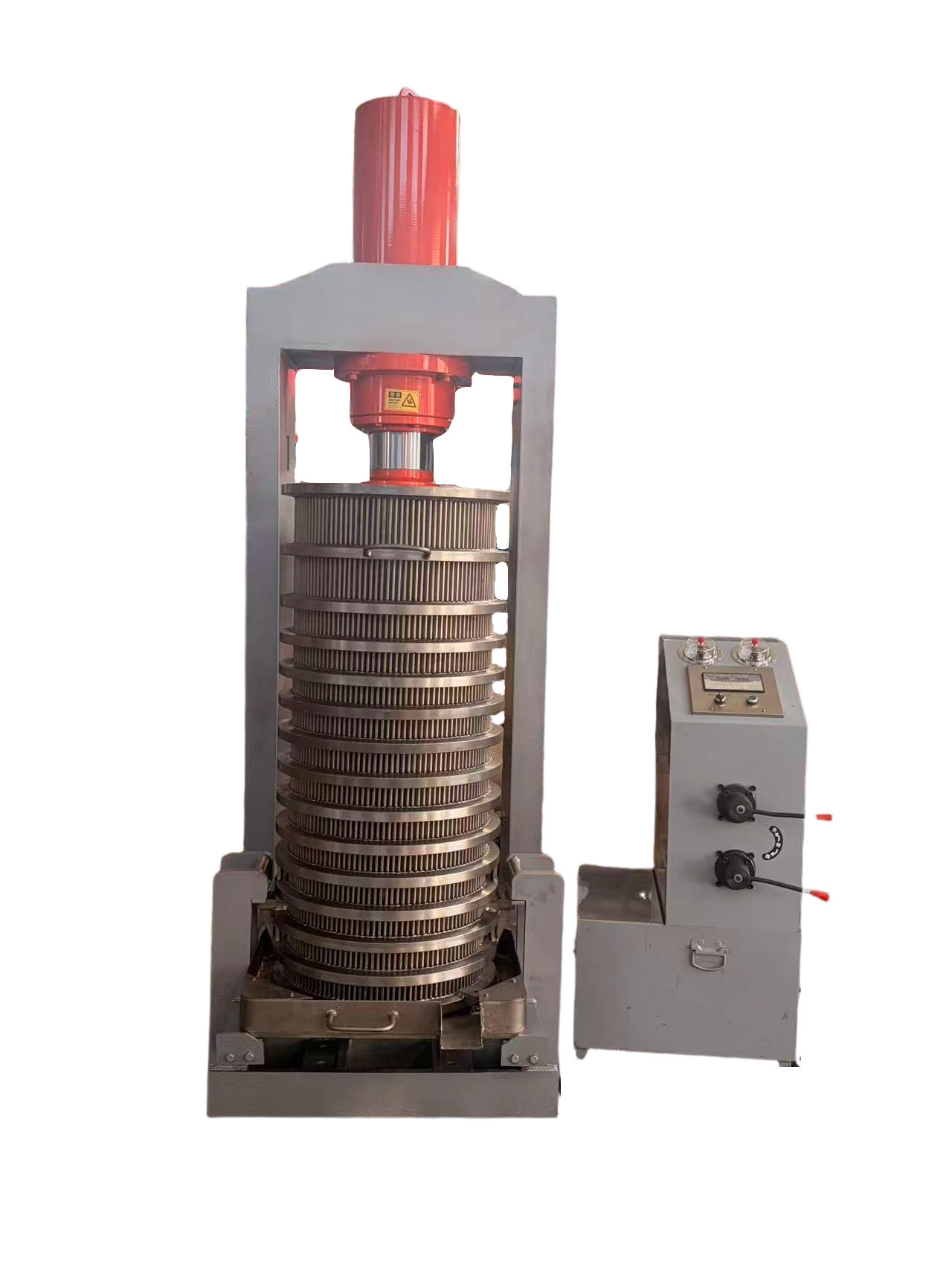
Hot 300/325: 300–325 ton, 60 MPa system, standard barrel Ø390×800 mm / max 100 kg, pure press 30–40 min/barrel, ~1.5 h for 2 barrels with loading, 2.2 kW motor. Cold 355/400/426/480/500: 370–630 ton, integrated frame, same 100 kg standard barrel, pure press ~2 h/barrel, ~4.5 h for 2 barrels with loading; optional Ø300 high-pressure barrel max 60 kg. Residual oil target ~≤5% (peanut hot often 6–8% measured).
- ▸Standard barrel Ø390×800 mm, max ~100 kg crushed feed; optional Ø300 high-pressure barrel max ~60 kg.
- ▸Cylinder material 27SiMn; cold frames are integrated molded steel; hot frames are typically H-type channel steel.
- ▸Listed on the factory hot-press page — discuss 300/325 first.
project scope needs to land in equipment interfaces
After Small Soybean Oil Factory | 5-30 t/d Hydraulic, Yield 12-16%, Capex $50-150k is clear, write the interfaces: how preparation feeds the press, how oil leaves the press, how filtration connects to tanks, and how packing receives finished oil.
Front-end input
Record feed form, daily volume, moisture, and sorting needs so pretreatment is not left to operators.
Degumming, lecithin, and meal
Crude soy oil holds 1.8–2.5% phospholipids — hydration degumming and lecithin drying are often phase-one. Meal protein 44–46% or 48–50% dehulled needs an offtake plan.
Delivery data
Prepare space, power (often 380V/50Hz/3ph), labor, target package, local rules, and acceptance method before quotation.
Clear these up first
10 t/d bean feed × yield 12-16% = 1.2-1.6 t/day crude soybean oil + 8-8.5 t/day soybean cake (dehulled HiPro meal protein 48-50%) + 0.7-0.9 t/day hulls (low-grade feed or fuel). At 24-h operation with 2× 325 ton press: ~24 cycles × 80-100 kg/barrel = ~2 t feed per cycle pair, matches 10 t/d on 8-h shifts × 3 shifts.
These next pages move the discussion forward
Process intent
Soybean Oil Press Process Guide: Pretreatment, Hydraulic Yield, and Real Parameters
A soybean hydraulic oil press process guide on real numbers: bean oil 18-22%, dehull hull 7-9%, flake 0.25-0.35 mm, condition 70-80°C, hydraulic yield 12-16%, residual cake oil 6-8%, dehulled meal protein 48-50%.
Continue →Line intent
Soybean Hydraulic Oil Press Line: Model Ladder, Shared Hydraulics, and Pretreatment Modules
How a soybean hydraulic oil press fits a working line: model ladder 200-325 ton (5-30 t/d), same 60 MPa / 2.2 kW hydraulics, plus cleaning, dehulling, flaking 0.25-0.35 mm, conditioning 70-80°C, filtration, and meal modules.
Continue →Buying guides
Hydraulic vs Screw Oil Press for soybean: Which Fits Your Mill?
Compare hydraulic batch press vs continuous screw (expeller) for soybean: oil quality, cold-press ability, capacity, residual oil, labor, and when each route wins. Use this before you request a quote.
Continue →Send this page's requirement to the factory
Bring feed condition, target output, and site constraints, and we will continue from what this page covers.